How to accept checks by phone
How it works, when it’s allowed, what Check 21 means for your deposits, and how it compares with ACH and credit cards.
Try CHAX 11 Free See PricingGeneral information, not legal advice.
How it works, when it’s allowed, what Check 21 means for your deposits, and how it compares with ACH and credit cards.
Try CHAX 11 Free See PricingGeneral information, not legal advice.
$0
CHAX per-transaction fees
~2 days
Typical time to clear after deposit, sometimes up to five
5 years
Minimum CHAX 11 suggests keeping each authorization
2016
Year FTC limits on telemarketing sales took effect
The basics
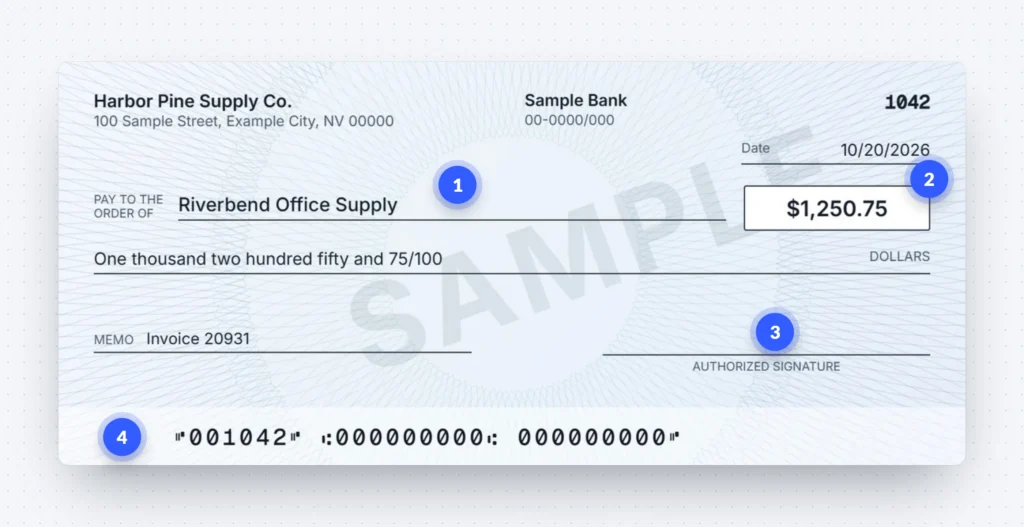
Also called a remotely created check or demand draft, it’s a check your business creates after the account holder authorizes it.
Three steps
CHAX 11 walks you through the authorization and the check. Screens show sample data.
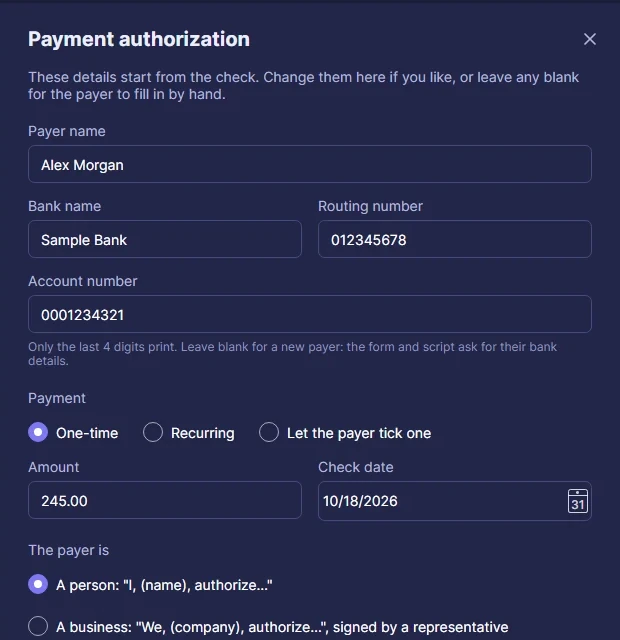
STEP 1
Use the phone script for one-time payments, read on a recorded call, or send a form for the payer to sign and return.
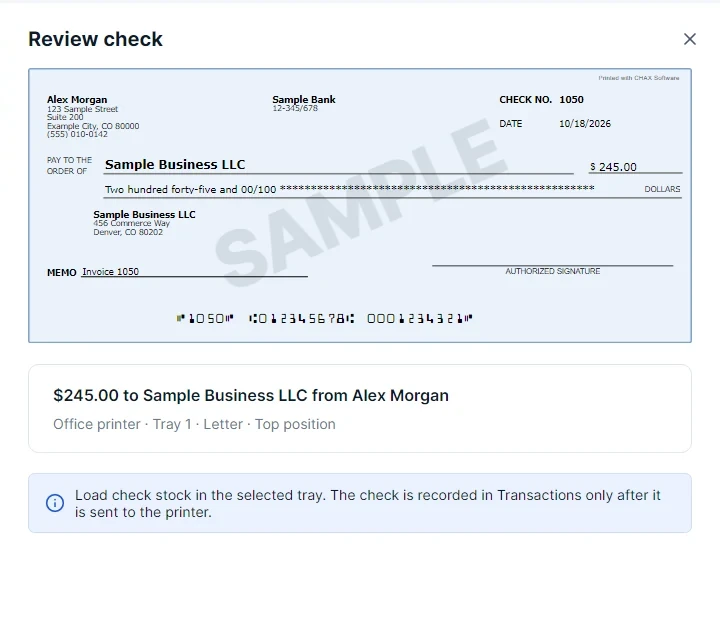
STEP 2
Check the details on screen, then print on blank stock. The check is recorded in Transactions once it’s sent to the printer.
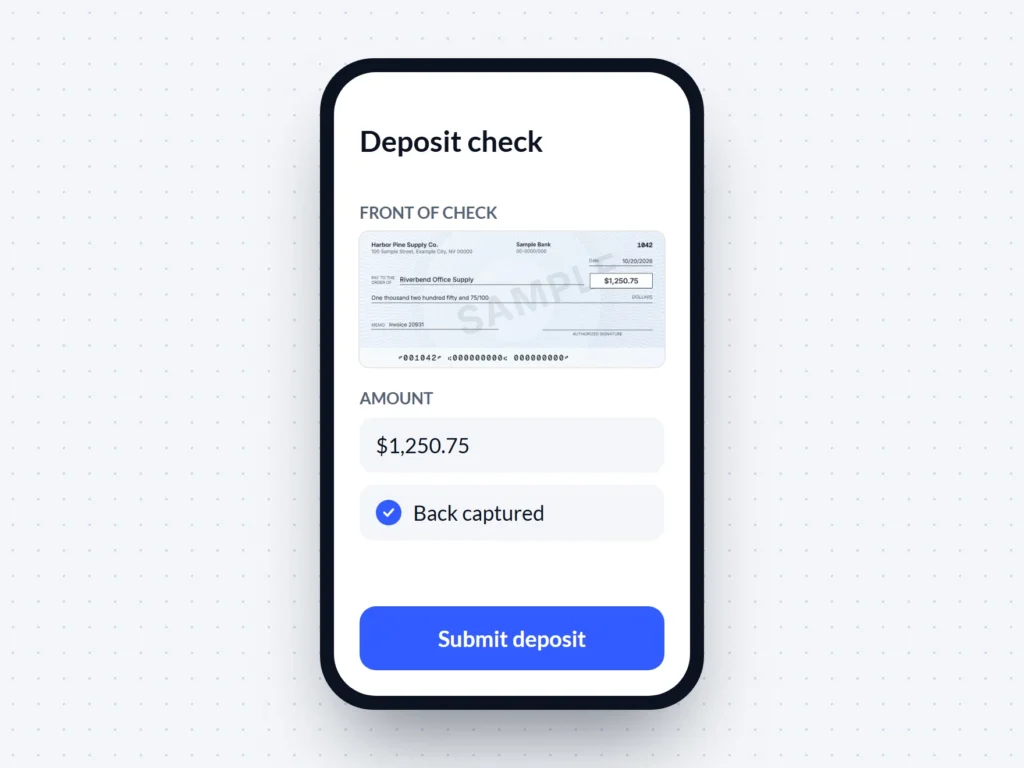
STEP 3
Deposit at a teller, or through mobile banking or a check scanner if your bank allows it.
Authorization
Authorization is the foundation of every check by phone, and it’s your proof if a payment is ever questioned.
Get it in one of two ways: a signed form, or a one-time approval on a recorded call. Either way, the payer should clearly agree to the payee, amount, date, and account before you create the check.
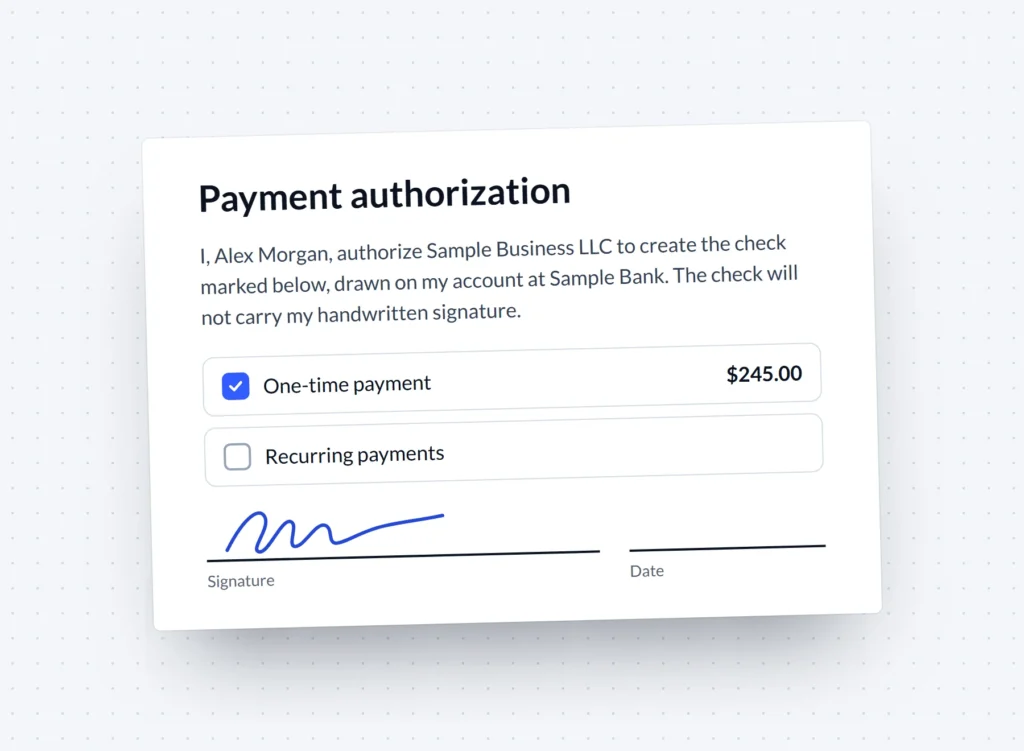
The payer signs and returns the form, with a voided check if you need one. CHAX 11 uses a signature for recurring payments, because its phone script covers one-time payments only.
You read the script and record the payer’s answers. If an answer is no or unclear, stop and don’t create the check.
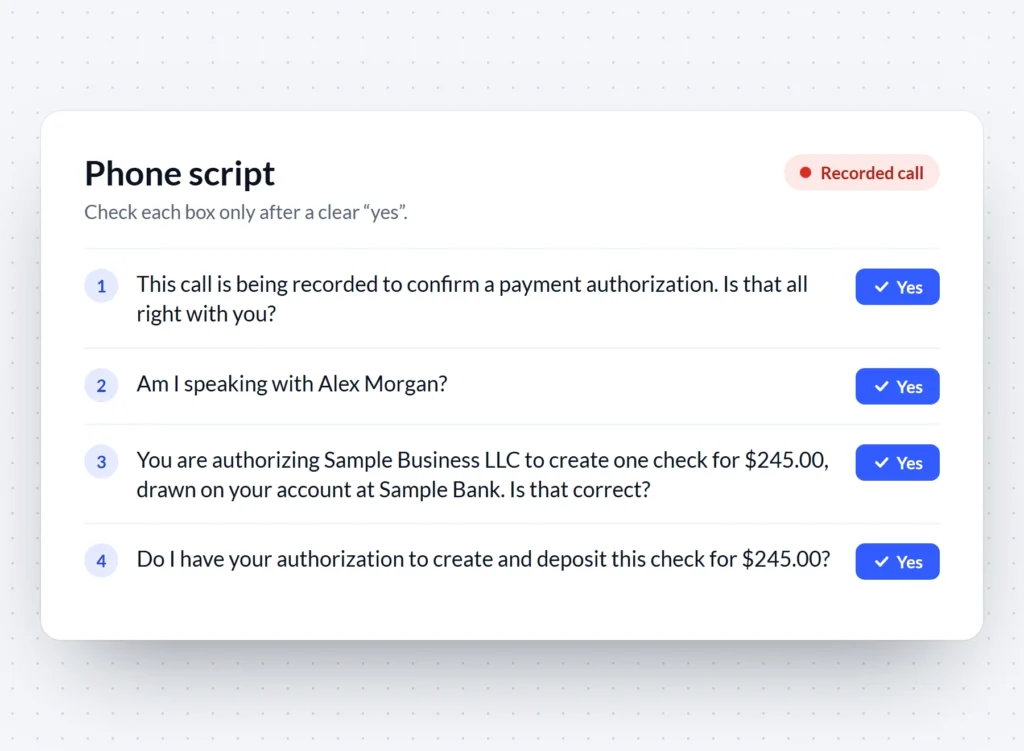
Recording a call? Some states require everyone on the call to agree to recording, so the script asks first.
It should get a clear “yes” to each part of the payment. The CHAX 11 script covers these points, in this order:
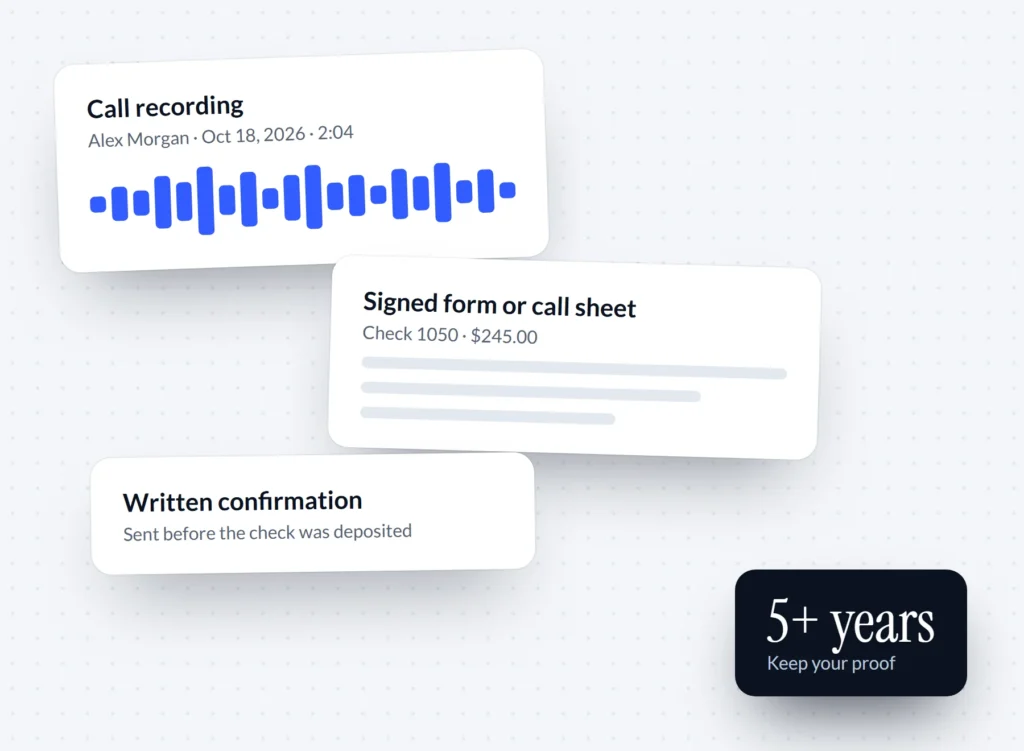
CHAX 11 suggests keeping them for at least five years. They’re your proof the payer approved a check if it’s ever disputed. Your bank, state, or industry may set different rules, so confirm with them.
The rules
Draft checks are generally recognized under the Uniform Commercial Code when the account holder has authorized them, but federal rules limit how you can use them.
The FTC Telemarketing Sales Rule bars sellers and telemarketers from accepting remotely created checks in most telemarketing sales, on inbound and outbound calls. CHAX 11 shows this reminder on its authorization screen, and points you to the phone script for bills already owed.
“Signed” includes any symbol adopted with the intention to authenticate a writing, and an authorized agent can sign. States enact their own versions, so section numbers vary.
It covers most telemarketing sales of goods or services. Exemptions and definitions matter, so ask a legal advisor whether your calls are covered.
A bank that transfers or presents a remotely created check warrants that it was authorized, so your bank may ask how you get authorization.
Check 21 is signed into law.
Check 21 takes effect.
The Federal Reserve adopts warranties for remotely created checks.
FTC limits on telemarketing sales take effect.
Good practices
Good records protect your business, and they make things easier if your bank has questions.
Who uses it
Businesses that collect payments from people or companies who prefer to pay by check. Many use it for bills already owed, because the FTC rule limits telemarketing sales to consumers.
Rent from tenants who’d rather pay by check than mail one.
Balances that patients already owe.
Invoices from clients of accounting, legal, and other firms.
Payments from other businesses, without waiting for the mail.
Premiums from policy holders.
Payments on existing debts. Debt collection has its own rules, so check them first.
When things go wrong
Plan for these before your first deposit. Your bank’s agreement sets many of the details, including its fees and time limits.
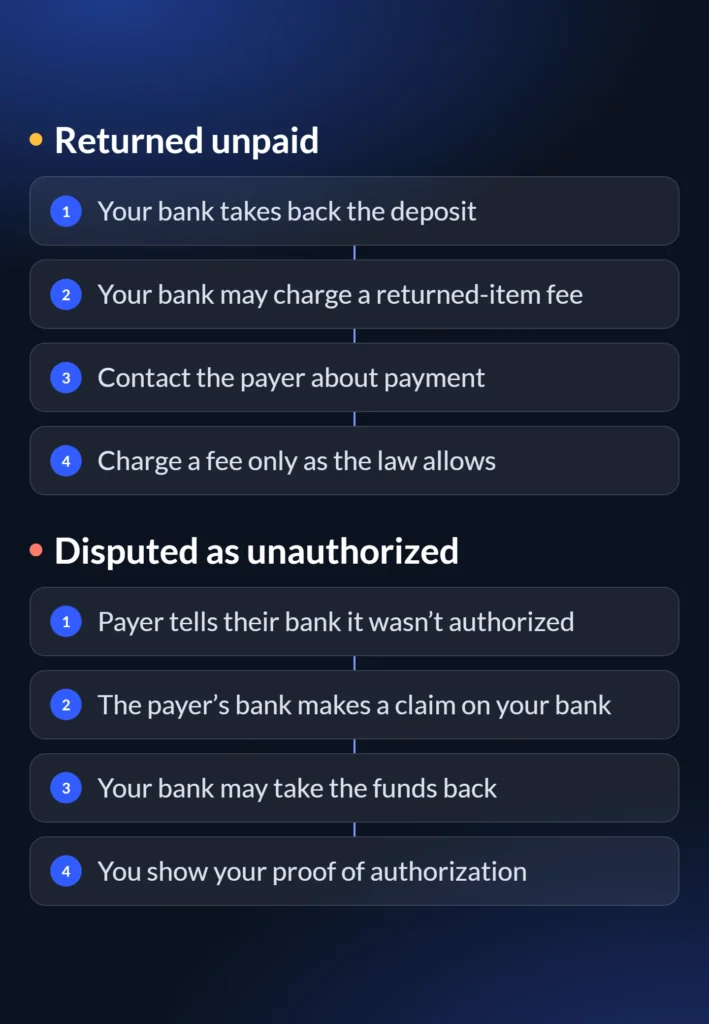
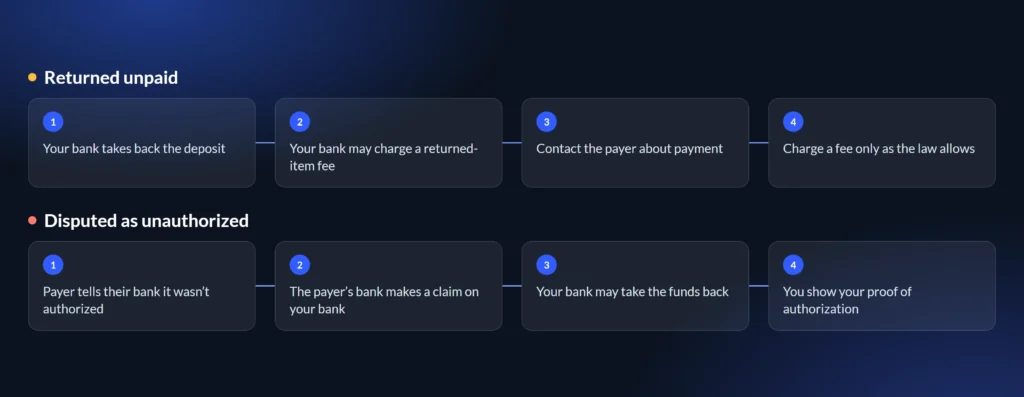
It works like any other returned check. Your bank takes the deposit back from your account and may charge you a fee, then it’s up to you to collect from the payer.
The CHAX 11 form tells the payer that a returned-check fee may apply, as allowed by law. Limits vary by state, so confirm yours before you charge one.
Show your proof of authorization. If the payer tells their bank the check wasn’t authorized, that bank can make a claim on your bank, and your bank may take the funds back from your account.
Under Regulation CC, the bank that takes your deposit warrants that the check was authorized, and the Federal Reserve wrote the rule to shift that liability to the depositary bank. Claims can arrive well after the deposit, so ask your bank how it handles them.
For your customers
It can be, when they know who they’re dealing with. Routing and account numbers can be misused, so customers should only share them with a business they trust, ideally on a call they expect or started themselves.
You can make that easier by how you handle each payment.
Check 21
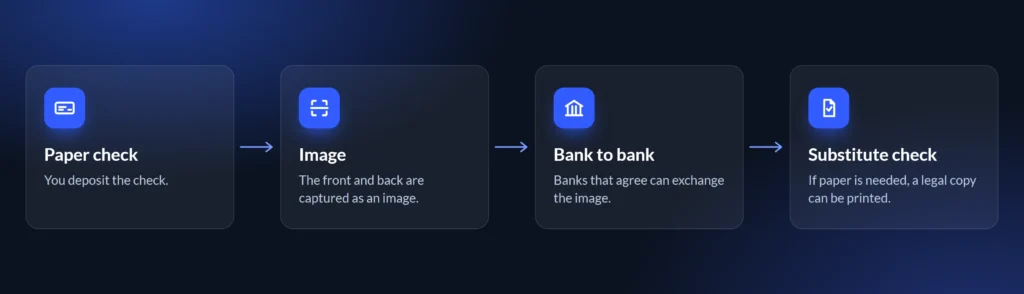
The Check Clearing for the 21st Century Act lets banks process checks electronically, and it’s a big part of why mobile deposit and check scanners are common today.
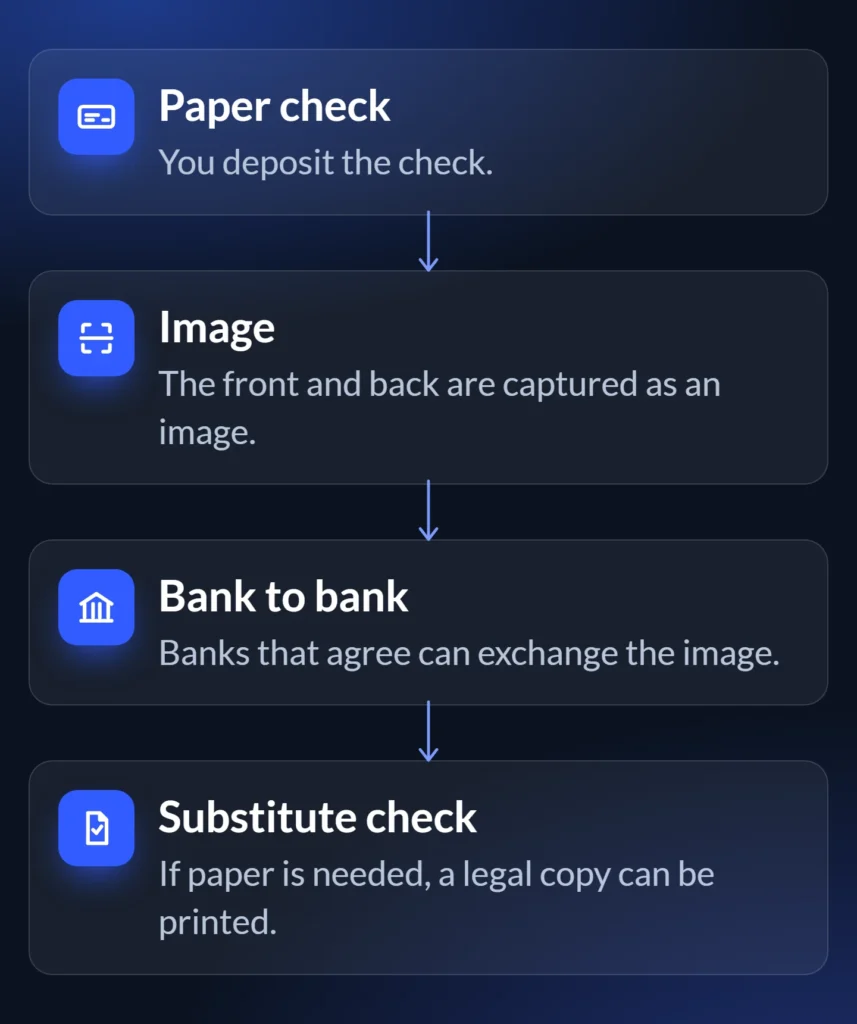
A substitute check is a paper copy made from a check image. If it’s properly created, it’s the legal equivalent of the original.
Check 21 doesn’t require any bank to accept checks electronically or to create substitute checks. Your bank’s rules still apply.
It’s about how banks process checks. It doesn’t authorize a payment, so you still need the account holder’s approval.
Compare
ACH, the Automated Clearing House, is a US network that moves money electronically between bank accounts. Nacha sets its rules.
| Check by phone | ACH debit | Credit card | |
|---|---|---|---|
| How it moves | Through the check system | Through the ACH network | Through the card network |
| What you need | Check software, printer, blank stock, MICR toner | A bank or processor set up for ACH | A merchant account or processor |
| Typical cost | No CHAX per-transaction fee. Bank fees and supplies are separate | About $0.20 to $1.50 per transaction | About 1.5% to 3.5%, plus $0.10 to $0.30 per transaction |
| Rules to know | UCC, Regulation CC, FTC rule | Nacha rules | Card network rules |
| Authorization | Required | Required for debits | Required |
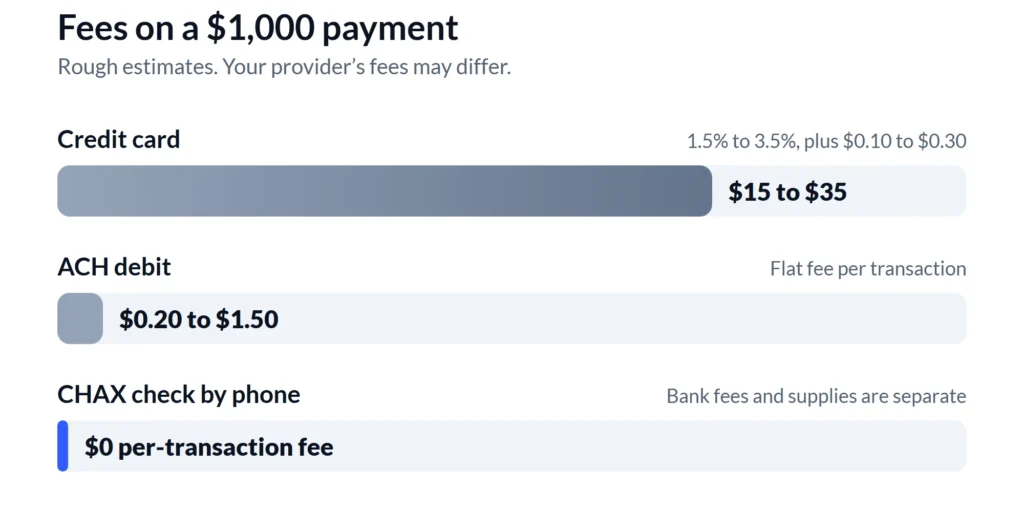
Card fees usually grow with the payment, while ACH fees are often flat. CHAX has no per-transaction fee, so your software cost stays the same as your volume grows within your edition.
Other ways to pay
An eCheck is usually an ACH debit that’s presented as an electronic check. It’s a market term with no single legal definition, so ask your provider how theirs works. A check by phone is different, because it’s an actual check that you print and deposit.
| ACH debit | eCheck | Check by phone | |
|---|---|---|---|
| What it is | An electronic debit | Usually an ACH debit, presented like a check | A check you create and print |
| How it moves | ACH network | Usually ACH network | Check system |
| What you do | Send through a bank or processor | Send through a provider | Deposit with your bank |
You have two main options: use a processor that accepts eChecks or ACH debits, or collect authorization online and create the check yourself.
Customers enter their bank details at checkout. You’ll need a provider, and you’ll usually pay a fee per transaction.
Email the authorization form for the customer to sign and return, then create and deposit the check. CHAX adds no per-transaction fee.
Protect your deposits
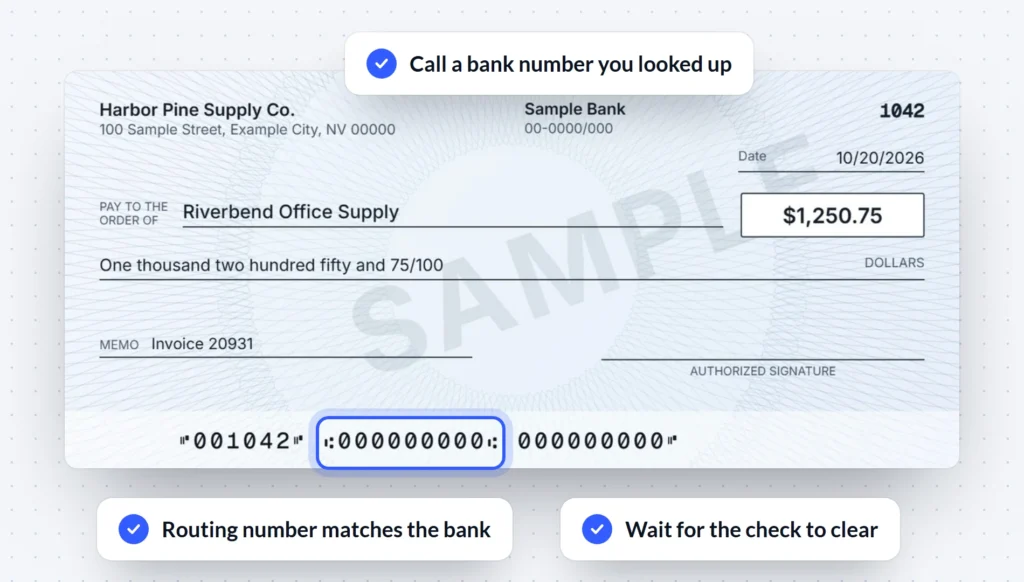
Check that the routing number matches the bank, then call the bank at a number you find yourself, not one printed on the check. Our free routing number lookup is a quick first step.
Don’t treat available funds as proof. The FTC warns that banks must make deposits available quickly, but a fake check can take weeks to be discovered. Warning signs include a routing number with fewer than nine digits, or a bank address that doesn’t match.
CHAX 11
A phone script, an authorization form, check review, and a record of every check in Transactions.
From $10.75/month, billed yearly
Start Free Trial See CHAX Software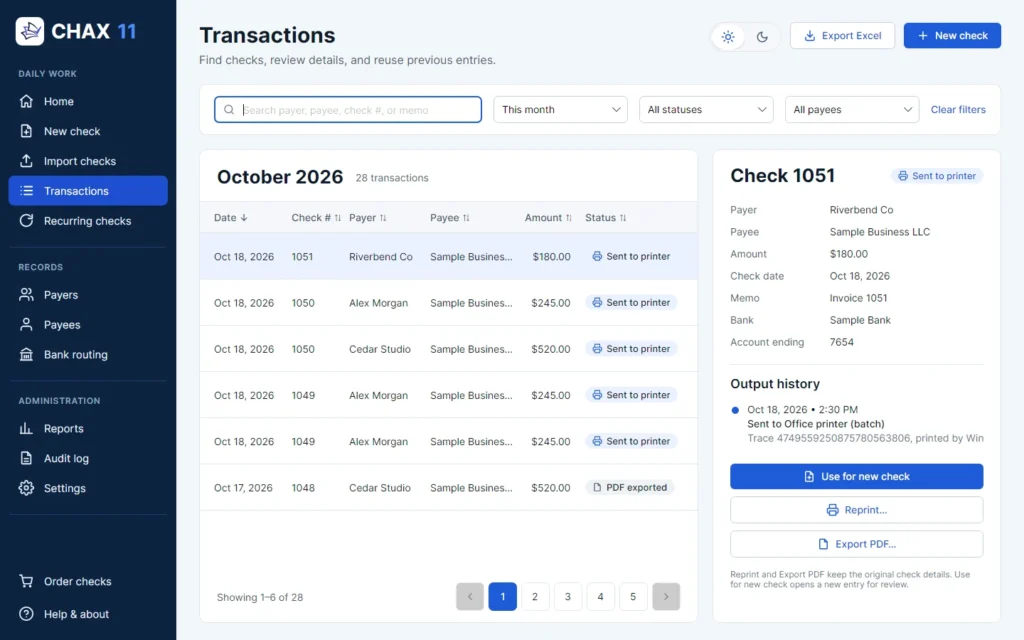
Often, yes, with the account holder’s authorization. The main exception is that the FTC bars remotely created checks in most telemarketing sales, so check whether your calls are covered.
You need the account holder’s name, bank, routing number, account number, the check number, and the amount, along with their authorization.
They’re commonly used to mean the same thing: a check the payee creates with the account holder’s authorization, without a handwritten signature.
No. A check by phone is a check that goes through the check system. An ACH debit is an electronic payment that goes through the ACH network, under Nacha’s rules.
Not quite. It makes a properly created substitute check the legal equivalent of the original, but it doesn’t require any bank to accept checks electronically.
Checks created with CHAX are regular bank checks, so they can be deposited through mobile banking apps or check scanners, as well as at a teller. Talk to your bank first, because it sets its own rules.
It usually takes about two business days from deposit, and sometimes up to five. Timing depends on your account, the payer’s account, and the check amount.
No. This guide is general information. Ask a legal advisor about your business, industry, and state.
Sources: FTC Telemarketing Sales Rule, Regulation CC, Federal Reserve Check 21 FAQ, FTC on fake checks, and Nacha. General information, not legal advice.